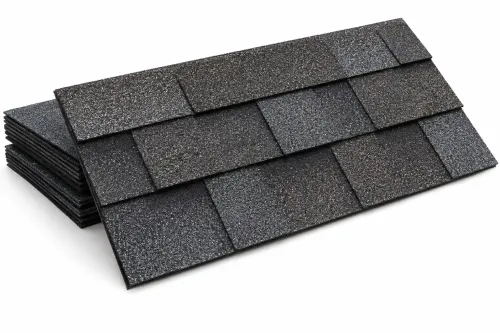
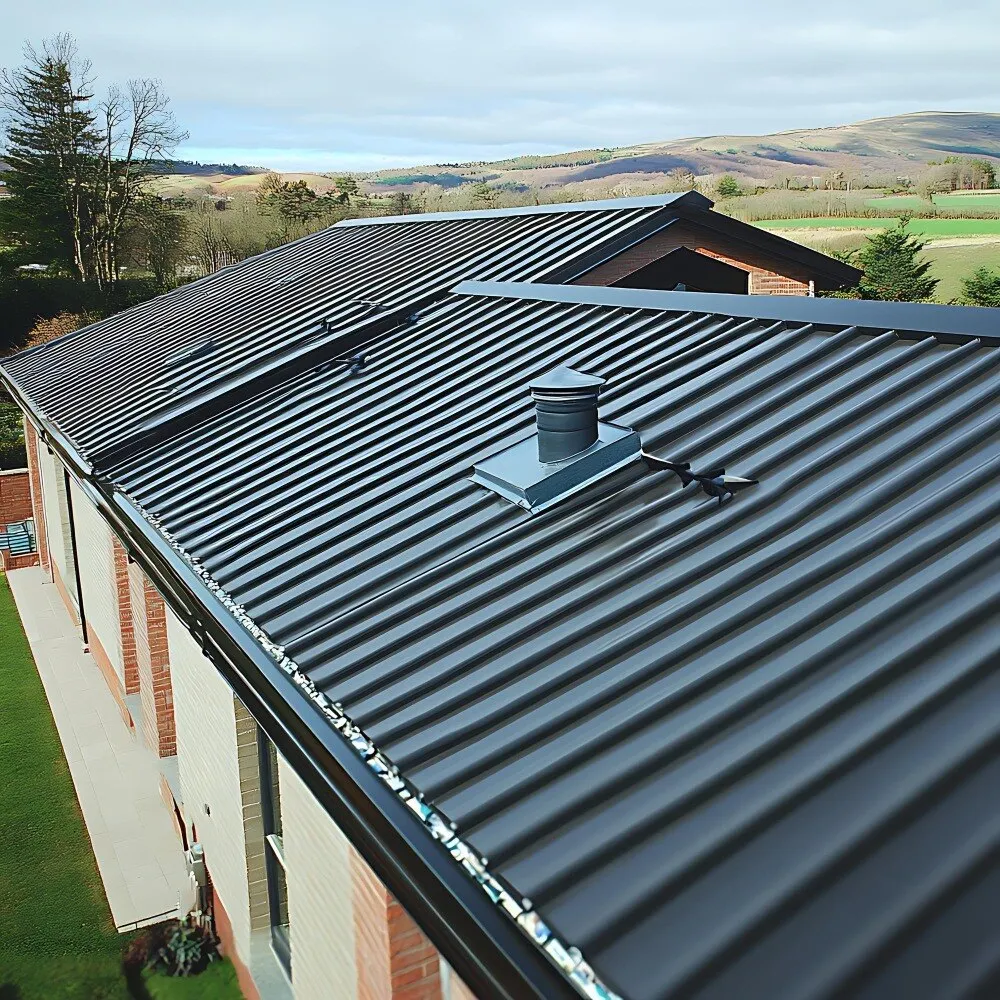
A quotation for stone-coated metal roofing can cover only profiled sheets, leaving the ridge, valley, flashing, fasteners and documentation unclear. By separating the roofing system into included, optional and separately sourced items, then checking coverage, materials, testing and installation limits, you can compare quotations on a like-for-like basis.
Key takeaways
- Request quantities based on effective coverage, not overall panel dimensions.
- Specify panel profile, steel thickness, coating, colour, fasteners, and warranty.
- Require test reports, product data sheets, and batch or traceability records.
- Check valleys, hips, ridges, penetrations, eaves, and roof pitch before comparing quotes.
What Makes Up a Complete Stone-Coated Metal Roofing System?
A complete stone-coated metal roofing system is more than profiled, interlocking panels. It combines the selected sheet profile with accessories that control water at ridges, hips, edges, valleys, penetrations and laps. Ask the stone coated metal roof sheets supplier for a bill of quantities based on effective coverage, not only the sheets’ overall dimensions.
Count sheets by piece and accessories by length, piece, box or carton.
The package should identify:
- Roof sheets, with the profile and approved minimum roof pitch
- Ridge caps, hip caps, barge or gable trims, and eave closures or fillers
- Valley components, apron flashings and step flashings
- Compatible fasteners, washers, sealants and replacement repair materials
- Ventilation products designed for the selected profile
| Component group | Expected in a complete package | Confirm separately |
|---|---|---|
| Roof sheets and caps | Sheets, ridge caps and hip caps matched to the profile | Quantity after side laps, end laps and fixing margins |
| Edge and water-control parts | Barge trims, eave closures, valleys, apron and step flashings | Gauge, length, colour and profile approval |
| Fixing materials | Compatible screws, washers, clips and sealants | Count, corrosion compatibility and pack size |
| Roof build-up | Underlay, battens or purlins, roof deck and insulation | Inclusion, specification and installation responsibility |
| Building-envelope accessories | Ventilation products and gutters | Whether they are supplied, optional or excluded |
A “complete roof package” does not automatically include underlay, structure, insulation, ventilation or gutters. Require written confirmation that every accessory suits the chosen profile and pitch; availability alone is not proof of system compatibility.
Which Stone-Coated Metal Roofing Specifications Belong on the Quotation?
A quotation is incomplete if it says only “stone-coated steel.” Require the steel substrate thickness, metallic coating type and coating mass separately from the finished panel thickness; ASTM A792/A792M is a useful reference for aluminium-zinc alloy-coated steel sheet.
Require these stone coated metal roofing specifications on the quotation:
- Profile: tile, shingle, slate or shake, with its installation code or product name.
- Overall panel length and width, effective cover width, side-lap and end-lap requirements.
- Steel thickness, finished panel weight per square metre and panel weight per piece.
- Metallic coating designation and coating mass, stated separately from the stone finish.
- Granule type, bonded resin or bonding system, colour, texture and clear protective topcoat, if supplied.
- Approved fastener type, sealant, underlay and accessory compatibility for that profile and roof pitch.
- Quantity and selling unit for sheets, flashings, ridge and hip caps, valleys, trims, closures and fixings.
Overall size is not the area you will cover. Compare the quotation lines this way:
| Measurement or unit | What it means | Why it matters |
|---|---|---|
| Overall panel size | Full sheet before laps and fixing margins | It cannot calculate roof area alone |
| Effective coverage | Area covered after side and end laps | Use it for the sheet quantity |
| Accessory selling unit | Length, piece, box or carton | It exposes costs hidden by a square-metre price |
Ask for a bill of quantities based on effective coverage, with each accessory counted separately. Confirm that every flashing and closure suits the selected profile rather than assuming all manufacturer accessories form one universal system.
What Material Standards and Documents Should the Manufacturer Provide?
Do not accept “stone coated steel” as a material description. Require the stone coated metal roofing specifications to separate the steel substrate, metallic coating and finished panel thickness, then match each figure to a document or test report.
Ask the manufacturer for:
- A mill test certificate identifying the steel grade, base-metal thickness, mechanical properties, heat or batch number, and production standard. ASTM A792/A792M is the named standard for continuously hot-dipped aluminium-zinc alloy-coated steel sheet; the certificate should state the coating designation and metallic coating mass, such as AZ150 where specified.
- A product data sheet showing the profile, overall sheet size, effective coverage, laps, panel weight, metallic coating type, stone granule finish and colour. Do not use finished thickness as a substitute for substrate thickness.
- A finish declaration naming the granule type, bonding or resin system, application method and clear protective topcoat, if used. Stone chips provide appearance and texture; they are not the corrosion-protection layer.
- Installation instructions for the selected profile, including approved fasteners, underlay, sealants, flashings, minimum pitch and fixing pattern. Confirm that each trim or ventilation accessory is approved for that profile and pitch.
- Test reports or approval documents supporting fire, hail, wind or corrosion claims. ICC-ES AC166 addresses stone-coated steel roof-system performance, but a “windproof” brochure claim does not establish a tested design pressure.
- A written warranty, batch traceability statement and replacement-colour or repair-material procedure.
These records let you verify both the product and the paperwork before delivery, rather than relying on a sample panel’s appearance.
How Do Roof Conditions Change the Included Components?
Roof pitch determines whether a profile is suitable and which accessories belong in the package. Check the selected panel’s installation instructions, including its minimum pitch, underlay, lap and flashing details; transferring one profile’s minimum pitch to another creates a leaking roof.
The roof conditions that change the stone coated metal roofing inclusions are:
- Roof structure: Confirm whether panels fix to timber battens, steel purlins or a solid deck. The support determines screw or nail type, minimum penetration, spacing and washer requirements.
- Wind exposure: High-wind sites require the specified fixing pattern, stronger edge restraint and correctly secured perimeter flashings. Ask for fastener material, corrosion compatibility, head or washer type and spacing rather than accepting “screws included.”
- Rainfall and drainage: Heavy rain increases the importance of valley construction, eave closures, side-lap seals and correctly overlapped apron or step flashings. The quotation must identify these parts instead of pricing only the panels.
- Roof geometry: Hips, ridges, verges, roof-to-wall junctions and penetrations require profile-compatible caps, trims, closures or custom flashings. A simple gable roof needs fewer formed components than a roof with several valleys and dormers.
- Local requirements: Confirm the applicable building code, fire classification, corrosion environment and ventilation rules before ordering. These requirements can change the profile, underlay, fastener coating and flashing metal specified.
How Should You Compare Manufacturers’ Quotations?
Compare the installed roof system, not the lowest sheet rate. Ask every stone coated metal roof sheets supplier to price the same roof area using effective cover width, side-laps, end-laps and a stated waste allowance.
| Measure | Quote A | Quote B |
|---|---|---|
| Quantity basis | Sheets calculated from effective coverage | Sheets calculated from nominal size |
| Accessory basis | Ridge, hip, valley and flashing quantities shown separately | Accessories folded into a lump sum |
| Unit basis | Sheets by piece; trims by length; fixings by box | Mixed units with no pack quantities |
| Compatibility | Profile, pitch and approved accessories identified | “Standard accessories” only |
| Cost basis | Material, freight, unloading and tax separated | Single delivered total |
Use one schedule when comparing stone coated metal for roofing manufacturers. Require each quotation to state:
- The selected profile, panel dimensions, effective cover width, side-lap and end-lap.
- Separate counts for ridge caps, hip caps, barge and eave trims, valleys, apron and step flashings, closures, sealants and fasteners.
- Whether underlay, ventilation products, repair panels and replacement stone-chip materials are included, optional or excluded.
- Approval of every accessory for the selected profile and roof pitch; availability does not prove system compatibility.
- Delivery quantity, lead time, breakage allowance, replacement terms and warranty exclusions.
Maratha Roofing Products can be compared on the same schedule: request a revised bill of quantities if its first price uses only square metres. A cheaper quote often becomes dearer after missing valleys, flashings and fixing boxes are added.
Related product
Stone Coated Metal Roof Sheets Stone Coated Metal Roof Sheets combine durability with aesthetics, offering a long-lasting roofing solution. View product → |
Frequently asked questions
What belongs in a complete stone-coated metal roofing system?
Include profiled interlocking panels, ridge and hip caps, valley components, barge and eaves trim, flashings for penetrations, closure strips, underlayment, fasteners, sealants, and ventilation components where the roof design requires them.
Which stone-coated metal roofing specifications should appear on a quotation?
The quotation should state the panel profile, overall and effective cover dimensions, steel thickness, coating system, stone finish, colour, panel weight, fastener type, accessory materials, quantities, waste allowance, warranty, delivery scope, and installation exclusions.
What documents should stone-coated metal for roofing manufacturers provide?
Ask for the product data sheet, coating and substrate details, test reports named in the specification, installation instructions, warranty terms, batch or lot identification, and inspection or conformity documents supplied for the quoted product.
How should you compare quotations from stone-coated metal roof sheets suppliers?
Compare the installed system rather than the panel price alone. Check effective coverage, accessory quantities, roof-specific flashings, fastener quality, waste assumptions, delivery, installation scope, warranty conditions, and document completeness.
Keywords